Which dosing equipment actually fits your block?
Fertigation dosing equipment divides into manual systems — fertiliser tank, Venturi injector, suction-side injection, proportional injector — and automatic systems, which control EC and pH with a Venturi, a mixing tank or volumetric metering pumps. Installed cost runs from roughly €350 for an open tank to €15,000 for five channels of volumetric dosing, and accuracy rises with it: only volumetric dosing makes the dose proportional to water flow instead of to EC.
Why the mixing method decides the result
Fertigation means fertiliser and water delivered together: the nutrient solution the crop actually drinks. How that solution is prepared decides whether the recipe reaches the root zone or stops at the headworks — and it is the part growers most often buy on price.
There are two ways to make a working solution: dilute a concentrated stock, or dose fertiliser straight into a known volume of water. Every method aims at the same target, a solution of defined concentration; the methods differ in accuracy, labour and cost.
Whatever the growing system, soil or substrate, the purpose is a sufficient nutrient concentration at the root zone. That is why injection accuracy matters more than the headline flow rate of a pump.
Three questions to settle before buying
1. How accurately can nutrients be added?
The gap between the intended dose and the dose actually applied should be as small as possible. It is set by the injection method, not by the tank size.
2. How much of each fertiliser was actually applied?
Balanced fertilisation needs the ratio between nutrients, not just the total. With the common “Venturi + EC + pH” setup that ratio is unknown. A flow meter on each injection channel reflects it to some extent, but mainline flow is rarely constant, so a flow-meter figure deviates from the true application rate by 5–10%. Metering pumps control each channel volumetrically — at a price.
3. How do you automate fertilisers that barely move EC?
Many organic fertilisers, and urea above all, have almost no effect on EC. An EC-controlled system cannot see them, so they are normally dosed with metering pumps — which are expensive and need proper pre-filtration, or the pump clogs.
Two families of equipment
Manual
- Fertiliser tank (sealed or open)
- Venturi injector
- Suction-side injection, drawing fertiliser into the pump inlet
- Proportional fertiliser injector
Automatic
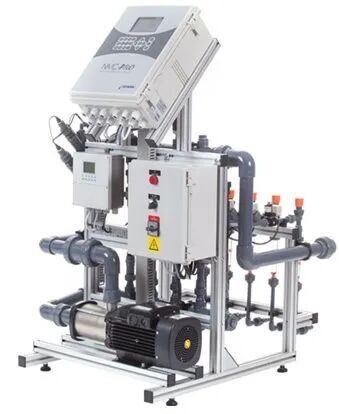
- Venturi-type automatic injection, controlled by EC and pH
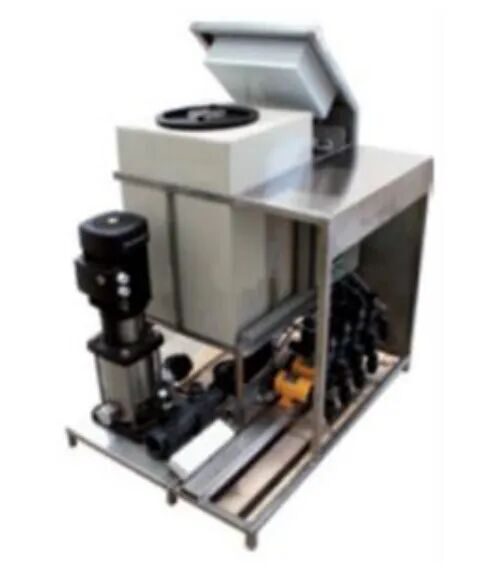
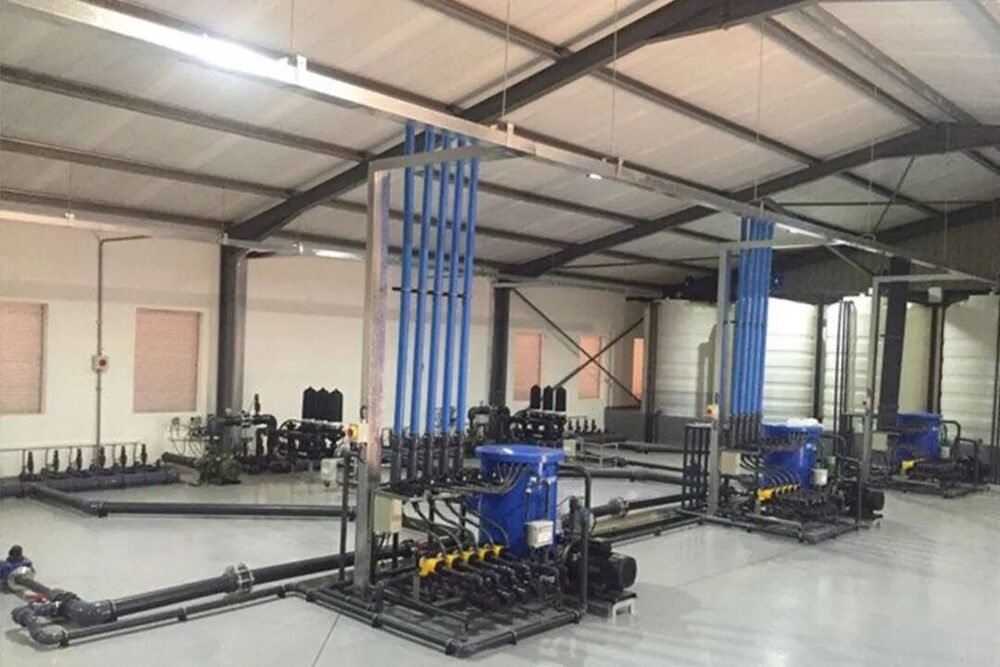
- Automatic injection with a mixing tank, controlled by EC and pH
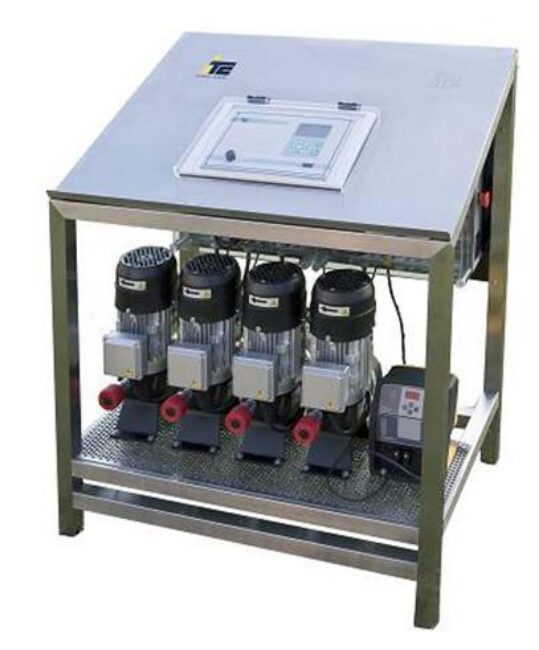
- Volumetric automatic dosing
Manual equipment in pictures
Fertiliser tank
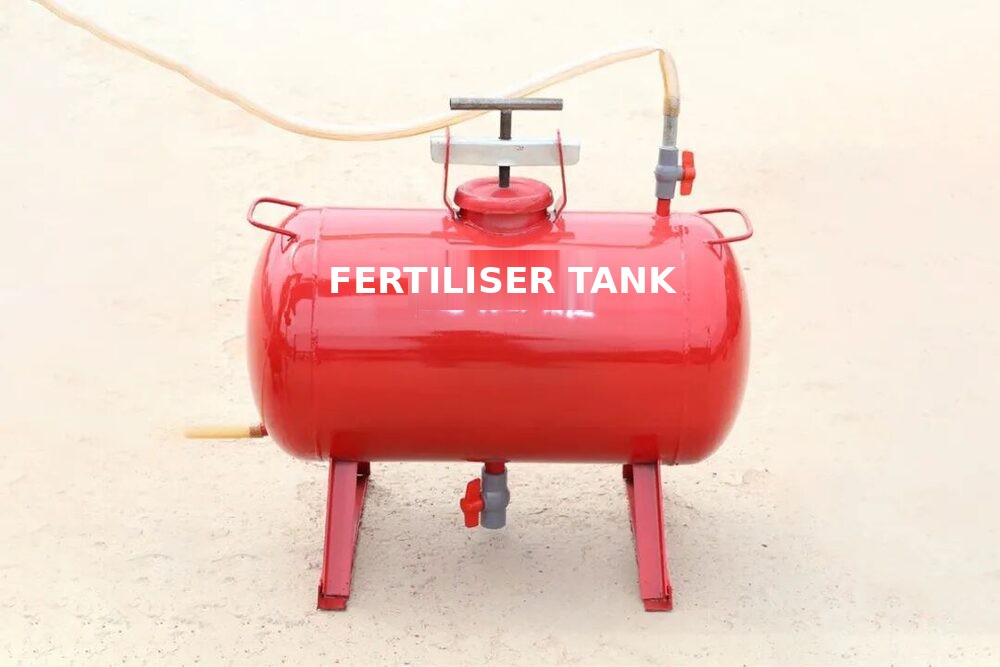
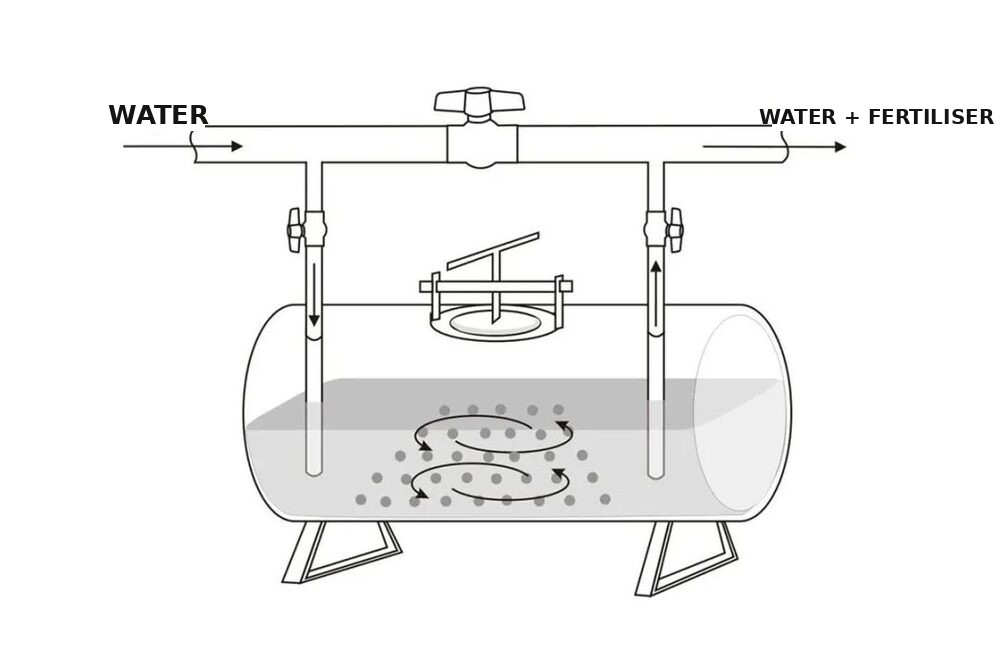
Venturi injector
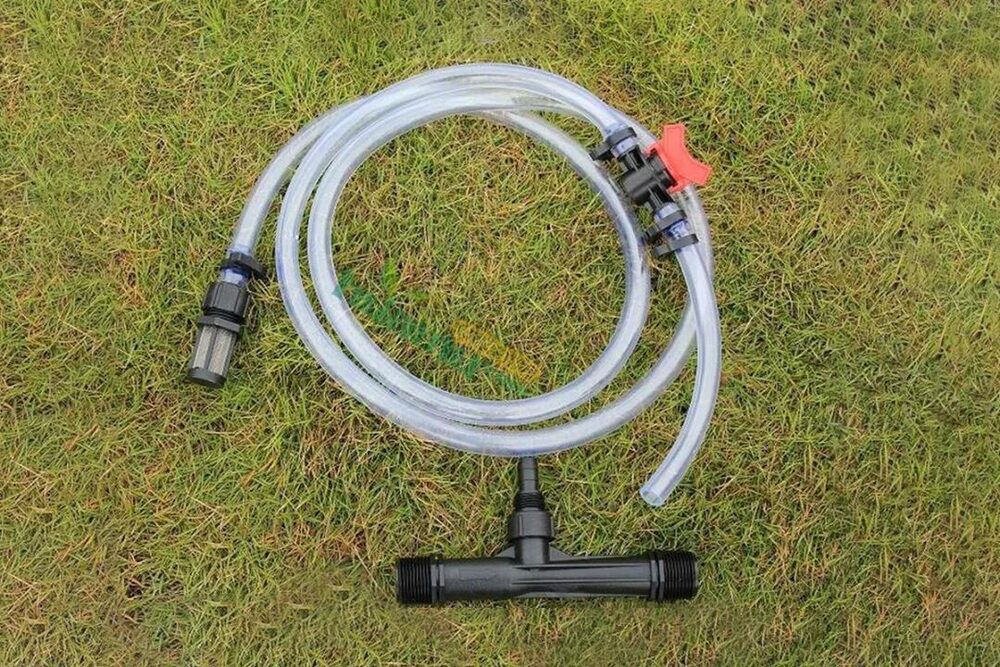
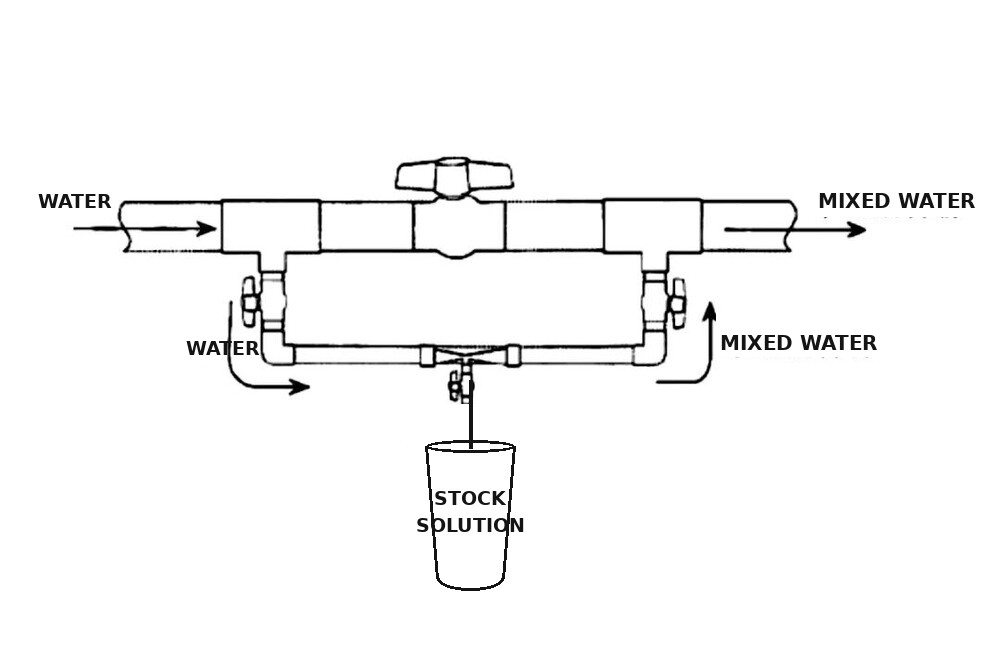
Suction-side injection
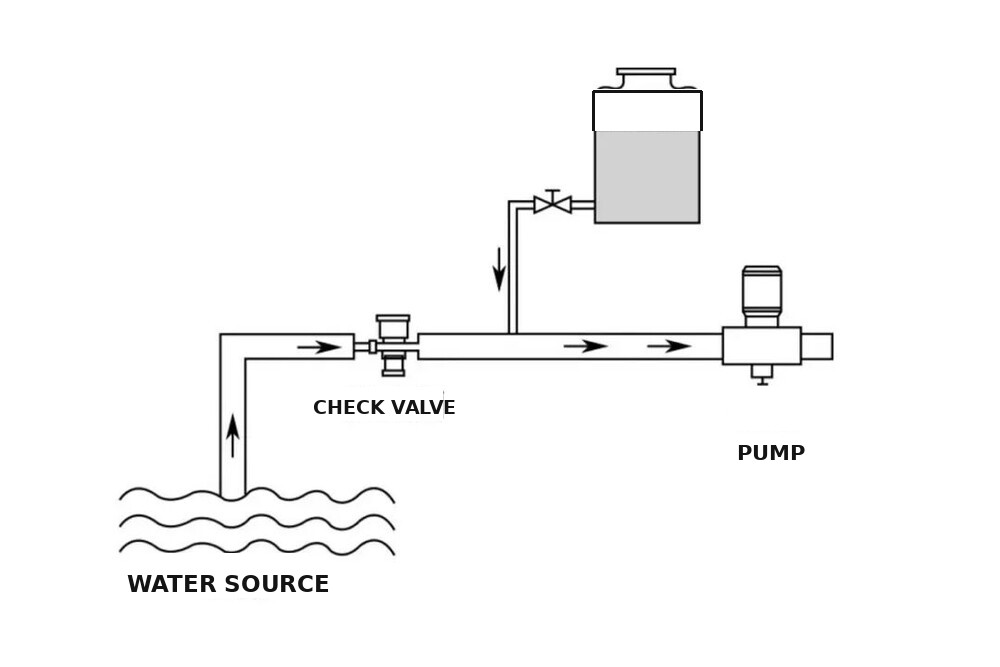
Proportional injector
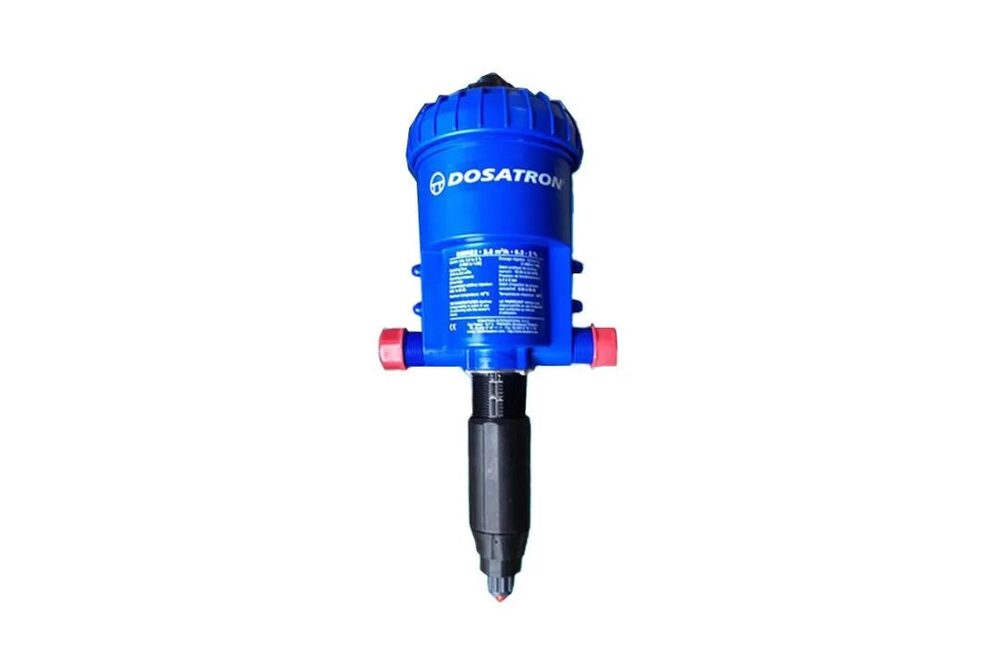
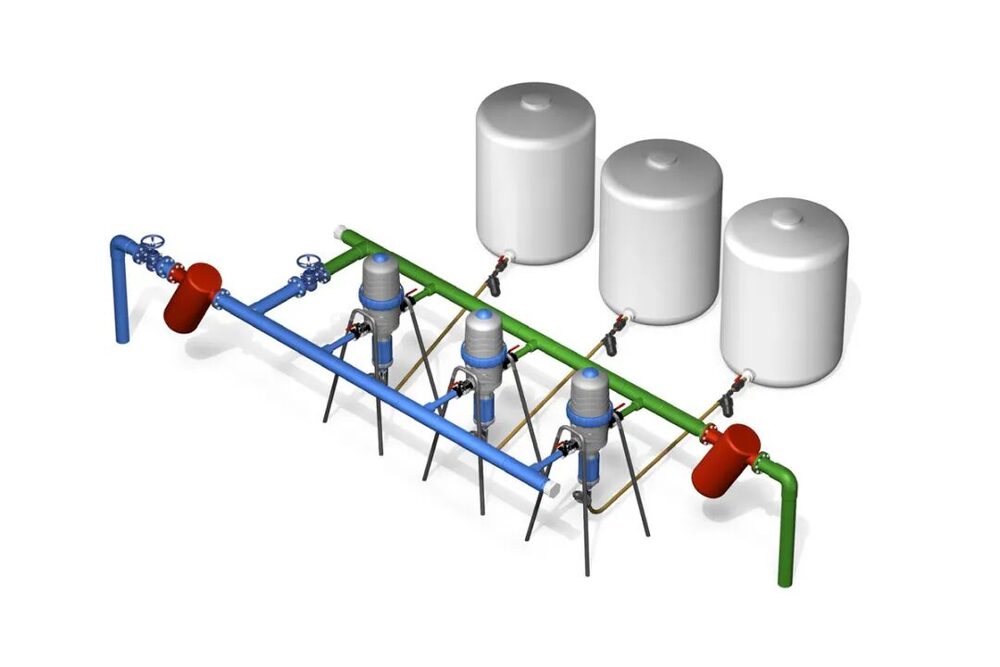
Diagrams and equipment photos reproduced from the original article, with their labels translated. The proportional injectors shown are Netafim and Dosatron equipment.
Manual equipment compared
The figures below are FERTINNOWA's European installation costs, reproduced from The Fertigation Bible; they are not EasyGrow prices.
| Sealed fertiliser tank | Open fertiliser tank | Venturi | Metering pump | |
|---|---|---|---|---|
| Installation cost | about €600 for 60 L | about €350 for 200 L | about €1,500–2,000 for A/B tanks plus acid tank | hydraulic pump (0–350 L/h) €700; electric pump (0–350 L/h) €1,000 |
| Maintenance | fill manually before irrigation | fill manually before irrigation | manual flow adjustment | regular calibration (hydraulic); power and pump maintenance (electric) |
| Advantages | low cost and simple; no power if pressure is sufficient; adequate for small farms | low cost and simple; adequate for small farms | no power if pressure is sufficient; cheap and simple; suits small farms | a hydraulic pump uses line pressure and reaches precise injection accuracy |
| Disadvantages | concentration in the tank is not constant; refill for every irrigation | the tank empties during irrigation and air enters the pump | injection rate is not proportional to flow; flow must be readjusted when pressure changes | electric pumps need power; hydraulic pumps need regular recalibration |
| Limitations | not suited to automatic control | needs a pump to draw the solution | poorly suited to automated fertigation; about 1.5–2 bar of head loss | proportional hydraulic pumps stay below about 20 m³/h; capital cost limits use |
Automatic equipment in pictures
Venturi-type automatic injection
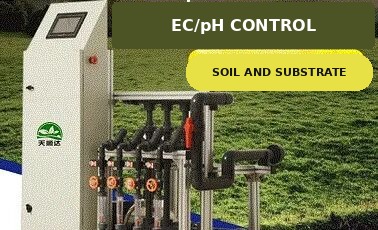
Automatic injection with a mixing tank
Volumetric automatic dosing
Automatic equipment compared
| Venturi-type automatic injection (EC/pH) | Automatic injection with mixing tank (EC/pH) | Volumetric automatic dosing | |
|---|---|---|---|
| Installation cost | about €5,000–8,000 for 5 channels | about €10,000–14,000 for 5 channels | about €15,000 for 5 channels |
| Maintenance | flow adjustment; pH and EC sensors and solenoid valves; electric pump | pH and EC sensors, solenoid pumps, solenoid valves; power | pH and EC sensors, valves, metering-pump diaphragms or lubricant; power |
| Advantages | if pressure is sufficient, only controller and solenoids need power — automated fertigation at an acceptable cost | more accurate than the Venturi-type automatic system | the most accurate method: dose proportional to water flow, not regulated through EC |
| Disadvantages | pressure changes alter injection flow, so pressure must be stabilised; irrigation must be supervised | dearer; needs power; solenoid pumps can burn out if the tank runs dry | still needs its own electric metering pumps; the dearest option; poorly dissolved fertilisers damage the pumps |
| Limitations | price still blocks small farms; A/B stock tanks reduce flexibility | cost is the main barrier to wider use | generally requires liquid fertilisers to protect the pumps |
What the comparison means for a buyer
Manual Venturi injection is the cheapest route that can later be automated, but its accuracy depends on pressure: a Venturi costs 1.5–2 bar of head loss, and every pressure change moves the injection rate. That is why the pressure-regulating valve and the stability of the mainline matter as much as the injector itself.
An EC/pH-controlled Venturi system is the mainstream choice for small and mid-sized farms. It needs stable pressure and someone watching the irrigation, and it cannot see fertilisers that barely move EC. A mixing-tank system buys accuracy at a higher price and needs dry-run protection for its pumps. Volumetric dosing is the only method where the dose is proportional to water flow, which is why it is specified for high-value crops, liquid fertiliser programmes and research.
EasyGrow builds in the Venturi branch of this table: nine models from a 300 W retrofit controller to an in-line headworks, 3–10 injection channels, 1–6,000 L/h per channel, EC accuracy from ±0.05 to ±0.3, and pH correction as a separate closed loop (INSFERT-PAST30) where the source water is alkaline. Prices are EXW China, packed, and are published separately — see the price list and the cost breakdown.
Source of the comparison: FERTINNOWA, The Fertigation Bible. Installation costs are European and are not comparable with EasyGrow's EXW price bands.
Frequently asked
What is the cheapest way to start fertigating?
A sealed or open fertiliser tank, at roughly €350–600 installed. It is cheap and needs no power, but the concentration in the tank is not constant and the tank has to be refilled before every irrigation, so it cannot be automated.
Why is a Venturi injector not proportional to water flow?
Because the suction it creates depends on the pressure drop across it. When mainline pressure changes, injection flow changes with it, so the flow has to be readjusted to hold a concentration — and the Venturi itself costs about 1.5–2 bar of head loss.
When is a metering pump worth the money?
When the dose must be proportional to water flow, or when the fertiliser barely moves EC — urea and many organic sources. Metering pumps reach the best accuracy but need pre-filtration and regular maintenance; a hydraulic unit costs about €700 and an electric one about €1,000 for 0–350 L/h.
Which dosing system suits a five-hectare block?
A Venturi-type unit with EC/pH control and 3–5 channels at 10–50 m³/h. EasyGrow's ECO and M cover that range; PRO or FLEX where dual EC/pH probes or a 6 bar mainline are specified.